Final Fantasy XIV
My personal cumulation of lore sources surrounding FFXIV.
I am no professional lore buff by any means so everything I have sourced here is all a mix between fan-collected and/or fan-made info and official information from the developers in order to come up with the backstories I make for my broad range of characters.So for the sake of having a place to come back to and sharing my findings so others might enlighten themselves, here are my sources that I used to come up with everything. Hope this helps you as much as it helps me, I am very forgetful....
| Term | Definition |
|---|---|
| Ijin | “Foreigner”. Can be used both politely or rudely. |
| Koban | Money. This is the term Hingans use instead of “gil”. |
| Bakufu | The Hingan military government. |
| Bugyo | Magistrate or Governor. Used in reference to the lord bugyo who rules Kugane. |
| Sensei | “Master”. This term is extremely uncommon; it is only used once in the entire game. The generic term “Master” is used far more frequently (such as “Master Musosai”). |
| Kami | used as a generic substitute for “gods”. (”Kami preserve us”, etc.). In a religious sense, used to refer to the spirits that reside in precious items and treasures, as well as nature. |
| Aibou | Generally, can be translated to “partner” or “buddy”, and can be used to refer to a close working relationship as “partner” (such as a detective and deputy). Reno and Rude from Final Fantasy 7 are an example of partners or “aibou”. In the Japanese version, Estinien calls the Warrior of Light “aibou” as well. |
| Keikaku | More than likely this is nothing more than a meme reference (as localisation often is). Still. It means plan. |
| Geiko | A skilled female entertainer. Modestly dressed, they engage in poetry, music, and dancing. |
| Tamahagane | Can be translated as “jewel steel”. In-game terminology is “Doman steel”. Tamahagane is symbolically significant in Hingan culture, most likely as the traditional material used to make katanas. |
| Onsen | A natural hot spring used for bathing. |
| Onmyoji | A priest (or more accurately, a diviner or cosmologist, but it seems to be interchangeable). Implied to be Hingan of origin. Onmyoji may use forbidden blood rituals to summon shikigami: restless spirits. |
| Omikuji | Far Eastern fortune telling. Legend has it the twelve beasts of Far Eastern legend known locally as messengers of the divine, once appeared before a monk in his dreams, and imparted to him twelve divine revelations each to which the monk compiled each of the twelve revelations, one hundred and forty-four all told, and then began a journey to spread this knowledge to others, for the benefit of all. As he traveled the land, word of the fortunes spread far and wide throughout the Far East. That is how omikuji came to be. |
- Astrologians attune to the stars to tap into their unaspected aether, which is a form of arcanima. Benefic/Malefic are real life terms from astrology, in the game they steer you towards a benevolent or a malevolent fate, which expresses itself in changing the past AND future. The LB3 limit break takes this a step further, steering you towards a fate of ultimate victory, according to the lore book. So while it is not explicitly "rewind time", it is ultimately "change the course of history to your favour".
Eorzean Alcohol List (In-Game drinks referenced by NPC's)
Mirke’s Menagerie Lore Index (This person has literally EVERYTHING, from city state lore, to individual races, cities, cultures, Allagan, The Twelve, etc, EVERYTHING.)
- Astrologians attune to the stars to tap into their unaspected aether, which is a form of arcanima. Benefic/Malefic are real life terms from astrology, in the game they steer you towards a benevolent or a malevolent fate, which expresses itself in changing the past AND future. The LB3 limit break takes this a step further, steering you towards a fate of ultimate victory, according to the lore book. So while it is not explicitly "rewind time", it is ultimately "change the course of history to your favour".
Eorzean Alcohol List (In-Game drinks referenced by NPC's)
Mirke’s Menagerie Lore Index (This person has literally EVERYTHING, from city state lore, to individual races, cities, cultures, Allagan, The Twelve, etc, EVERYTHING.)
Click here for --> Interactive Detailed Map of the Source
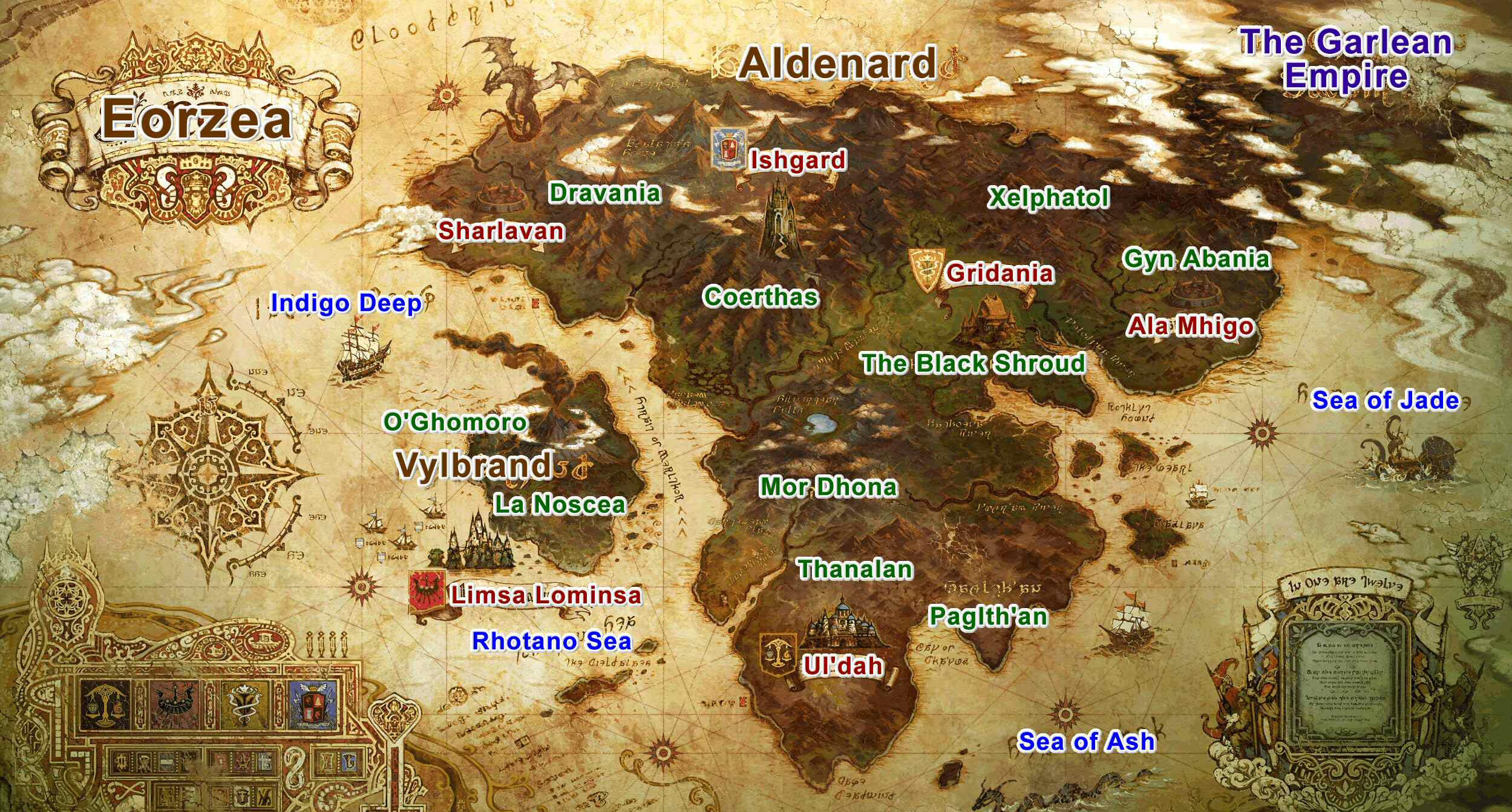
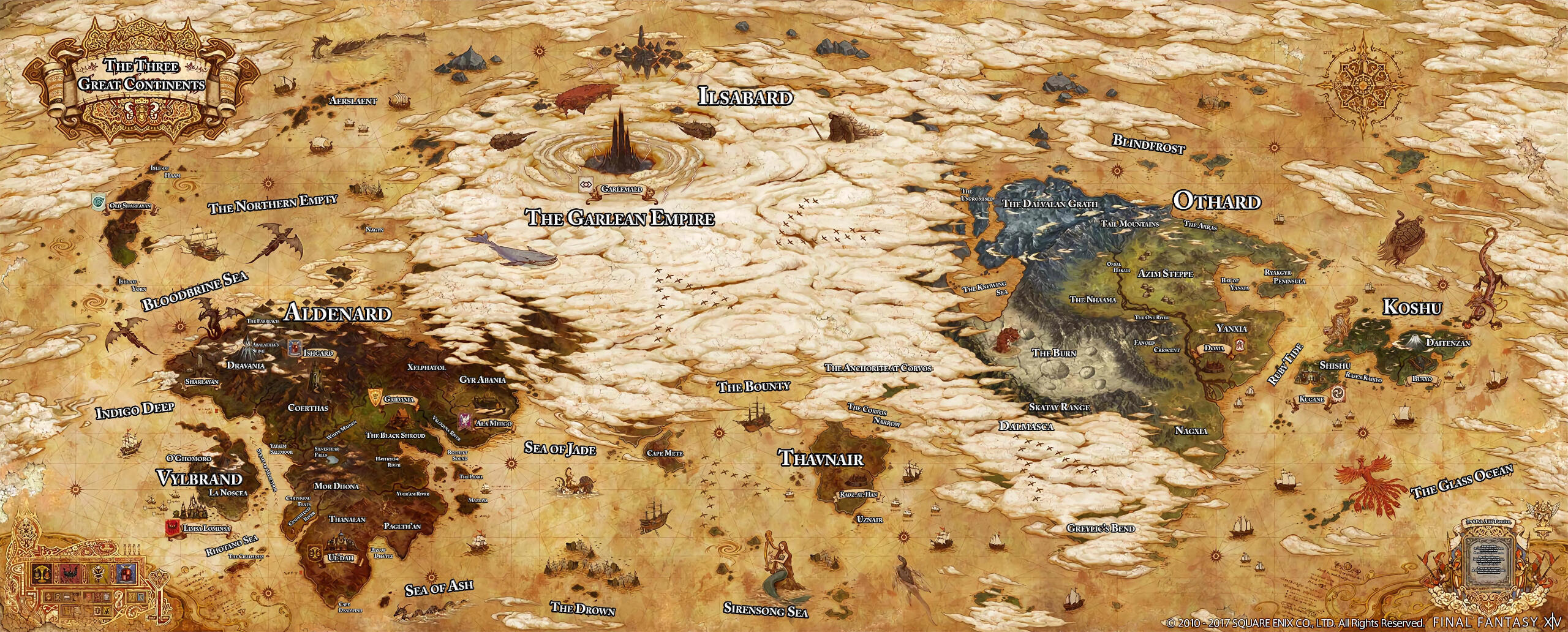


Mirke’s Menagerie Lore Index (This person has literally EVERYTHING, from city state lore, to individual races, cities, cultures, Allagan, The Twelve, etc, EVERYTHING.)
Mirke’s Menagerie Lore Index (This person has literally EVERYTHING, from city state lore, to individual races, cities, cultures, Allagan, The Twelve, etc, EVERYTHING.)
Off the Bat Viera Info:
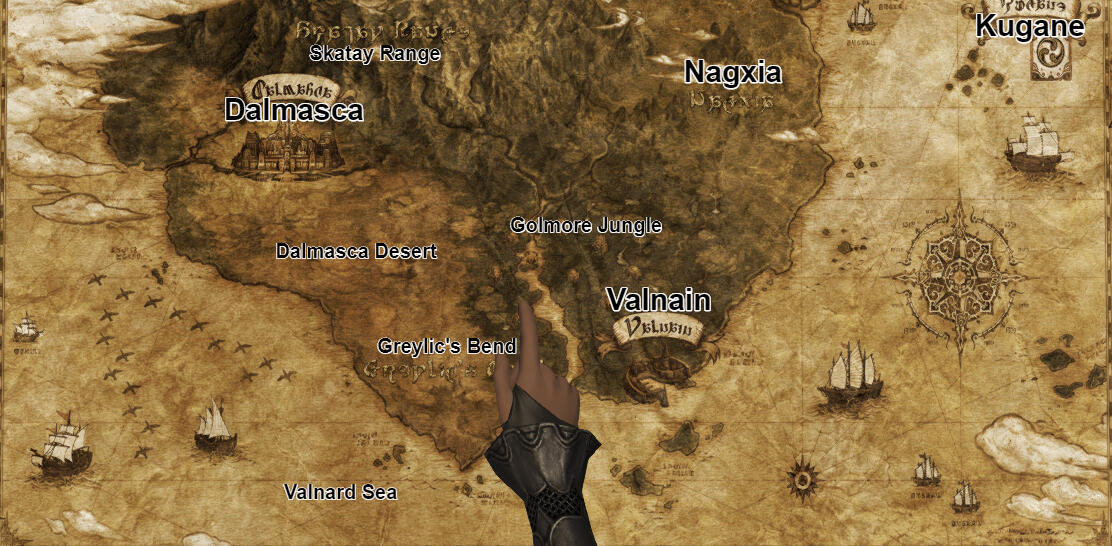
The Viera is a leporine race of people commonly found in Southern Othard. While the majority of their population resides closed-off from the rest of Hydaelyn in the Golmore Jungle, in recent times more have decided to leave the safety of the forest to explore the world. As such, it is estimated that the Kingdom of Dalmasca is comprised of around 5% of Viera.The Viera in Golmore Jungle live under a strict code, the "Green Word" (also known as the Word of the Wood), that forbid them from interacting with the outside world unless strictly necessary. Those who leave to discover the world are forever banished, never to return.In the alternate world the First, the Viera are known as "Viis" and live in the Rak'tika Greatwood as caretakers for the ruins of lost empire of Ronka.Physiology:
It is estimated that around 80% of Viera are born female, with males and females being identical at birth until they leave adolescence and reach adulthood around the age of 13, which is when males become distinguishable from females.Viera (and Viis) live for hundreds of years, easily longer than three lifetimes of an Elezen, who are known to live longer than many other races themselves. Viera retain their physical youth for centuries, making it nigh impossible to discern the age of a Viera from their outward appearance.Even though male Viera are the main guardians of the jungle, the martial prowess of female Viera is not to be underestimated as they are just as formidable as the men, merely choosing to devote their attention to the protection of their hearth and young.Culture:
The word "Viera" itself means "people of the wood" and a Viera child is referred to as a "kit".Like the Keepers of the Moon, Viera tribes are a matriarchal society that is ruled by, and mostly comprised of, women. Viera men are rare and remain deeply solitary, except when they return to their village of birth every three to five years to mate.While the men are the primary defenders, Viera women still defend the forest but they also devote time to responsibilities such as clearing undergrowth, removing fallen trees, planting seeds and eradicating vermin among other tasks.The Viera refer to aether as Mist, as demonstrated by Fran Eruyt at Orbonne Monastery.The response the Wandering Dramaturge got after asking a Viera woman "if she did not find her tribe's ways awkward. Was it not within the natural order for males and females of a species to coexist?" was:
"The value of coexistence will not be found 'neath a loincloth. Long has our kind endured understanding that the distance 'twixt two bodies does not dictate the distance 'twixt two souls."
In the alternate world the First, the Viera are known as "Viis" and much of the culture from the Viera of the Source is retained in the Viis culture itself, from being a matriarchal society and excluding males from their villages to said villages being formed around massive trees, linked by suspended paths.Wood-warders:
Despite being excluded from villages, male Viera still play an important role in Viera society by taking on the mantle of Wood-warders, serving as protectors of the forest. The duty of a Wood-warder is to ensure that the domain of their tribe is untouched by the destructive whims of outsiders.Male Viera return to their village every three to five years not only to mate but to claim any young males that have entered adulthood yet still live within the village, as their wards, to teach them how to survive in the wilderness on their own and without the crutch of companionship.Only after many seasons of training and strict adherence to the Word of the Wood will the students earn the title of master and be allowed to seek solitude.The training required to become a Wood-warder often leaves more than a few to perish during the brutal rite of passage, further thinning the number of males in the tribe.It is standard that Wood-warders attack from the shadows, often shooting first and not even bothering with asking questions.